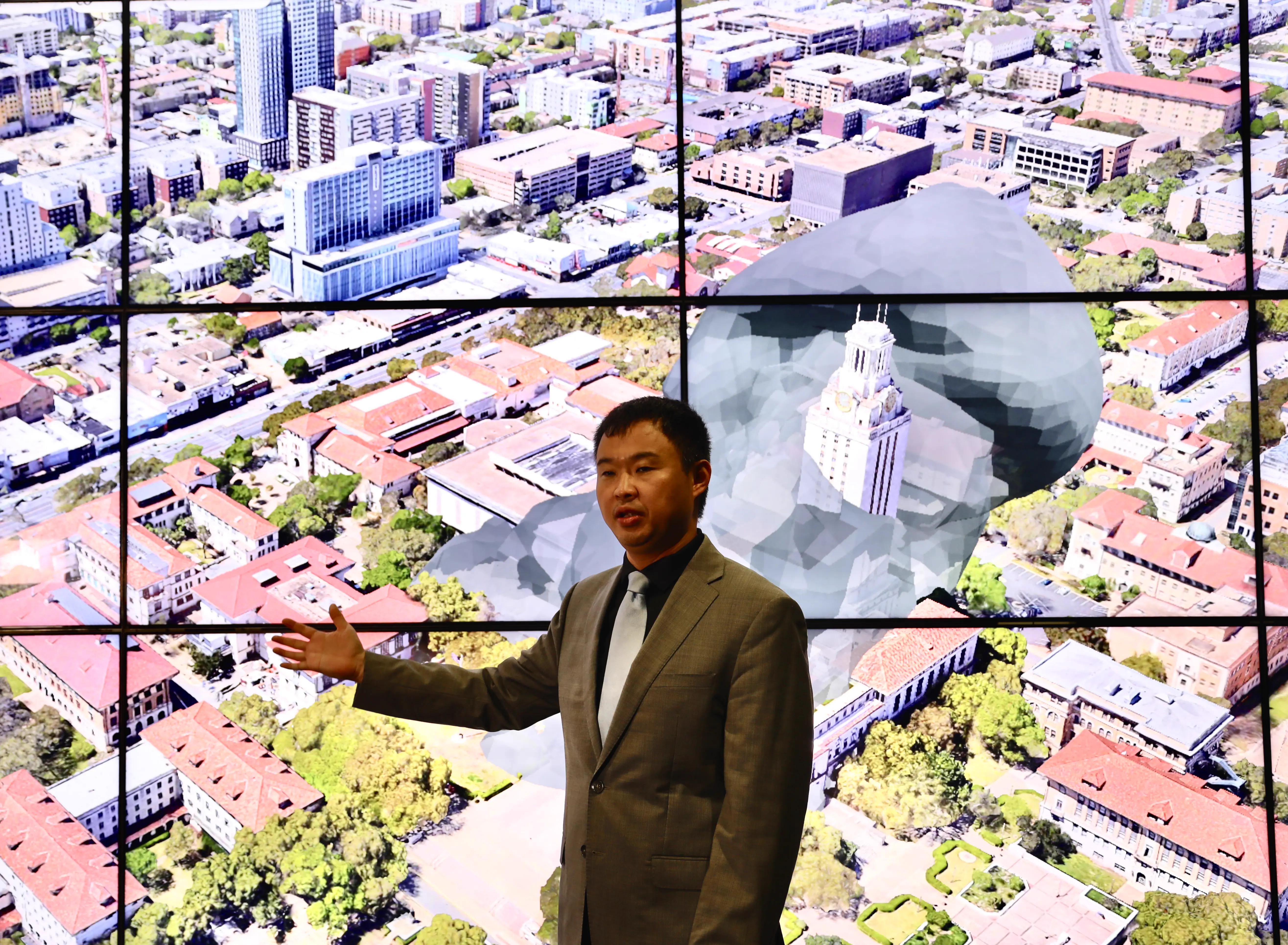
FIRE & SMOKE DIGITAL TWIN
A Computational Framework for Modeling Fire Incident Outcomes
Published in Computers, Environments, and Urban Systems (CEUS)
Team: Ryan Hardesty Lewis, Junfeng Jiao, Kijin Seong, Arya Farahi, Dev Niyogi, Paul Navratil, Nate Casebeer
INTRODUCTION
A digital twin is a virtual representation of physical systems, enriched by real-time data and advanced analytics, bridging the gap between the digital and the actual world. In the context of escalating urban and wildland fires, the Fire and Smoke Digital Twin offers a robust solution for predicting and mitigating the impacts of these hazards. By modeling both fire behavior and smoke dispersion in real time, this platform empowers emergency services, urban planners, and public health agencies to respond proactively and protect at-risk communities.
INITIAL CONCEPT
Historically, local fire management resources focused primarily on reactive measures—once a blaze starts, firefighters rush to contain it. However, this approach often lacks predictive capabilities, especially regarding how smoke will travel and which critical areas might be affected. Our goal was to build a cohesive framework that integrates geospatial data, weather intelligence, and risk modeling into a single platform, enabling authorities to anticipate potential spread and enact safety measures before conditions worsen.
COLLABORATION WITH THE AUSTIN FIRE DEPARTMENT
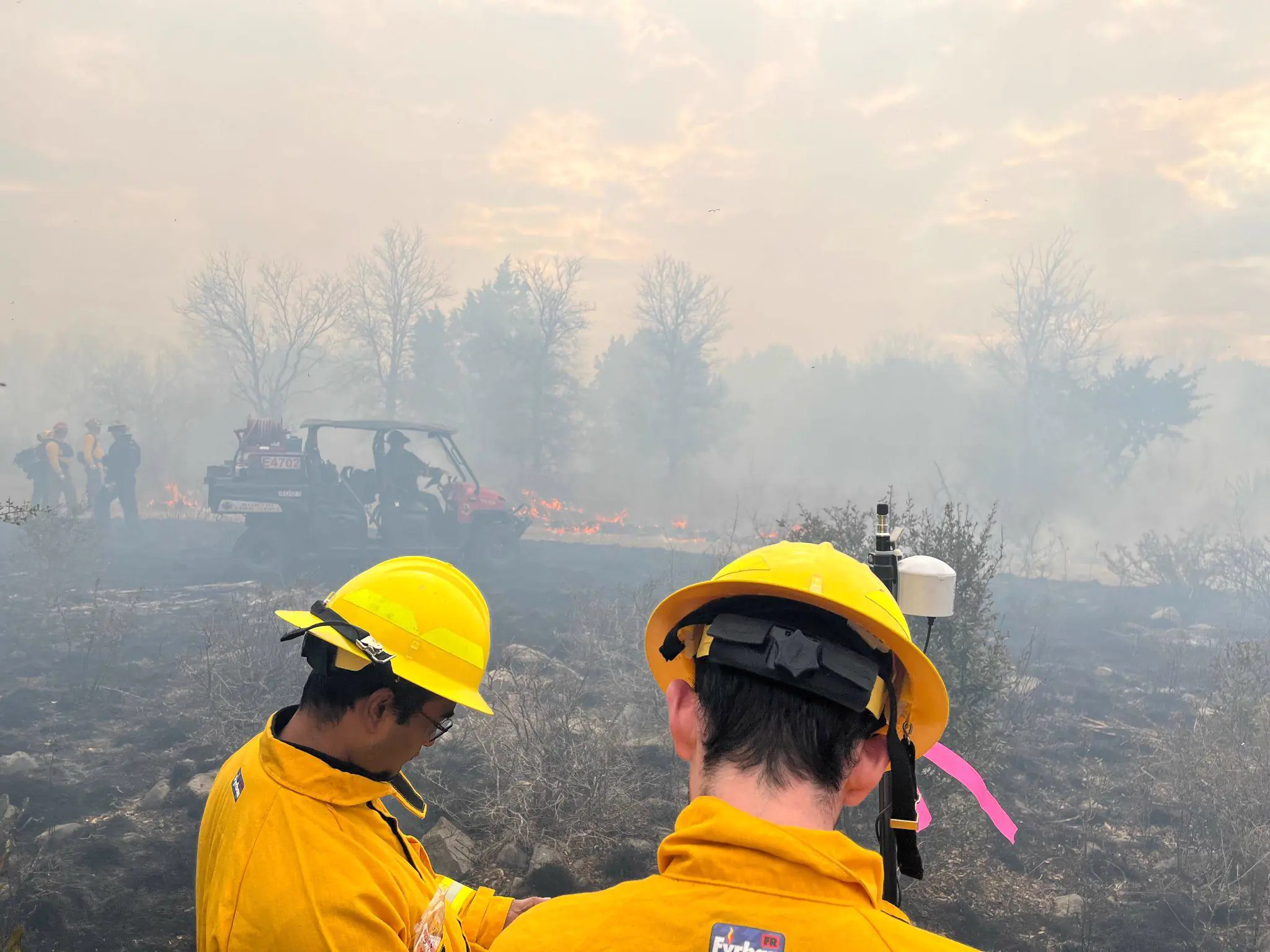
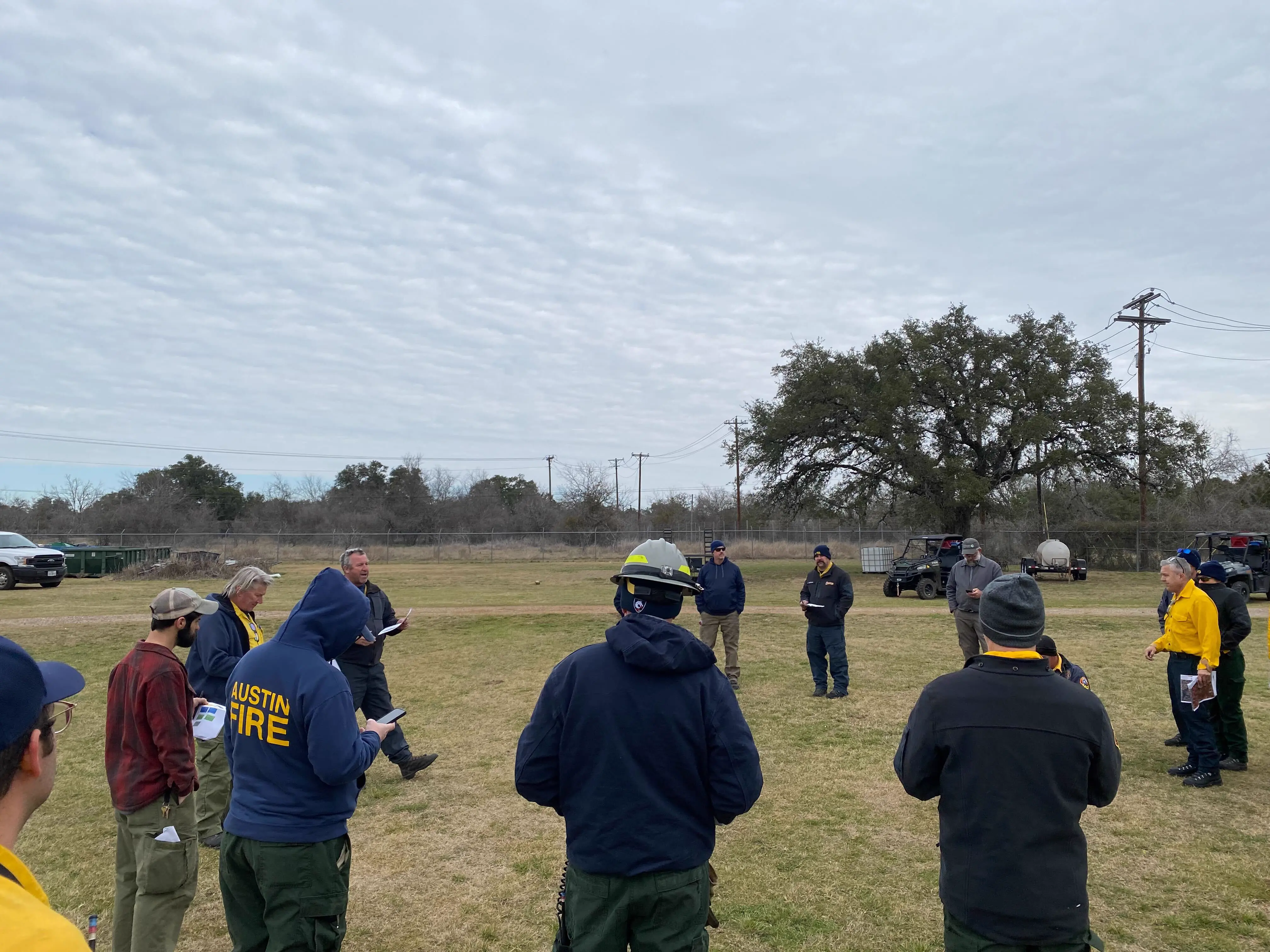
Developed in partnership with the AFD, our system integrates detailed incident reports, dynamic weather data, and structural details of Austin’s urban and WUI landscapes. This close collaboration ensures the platform addresses real operational needs—from assessing vulnerable neighborhoods to planning personnel deployment. Importantly, the AFD’s on-the-ground insights helped refine the system, making it practical and immediately beneficial to both emergency crews and local communities.
TECHNOLOGY & IMPLEMENTATION
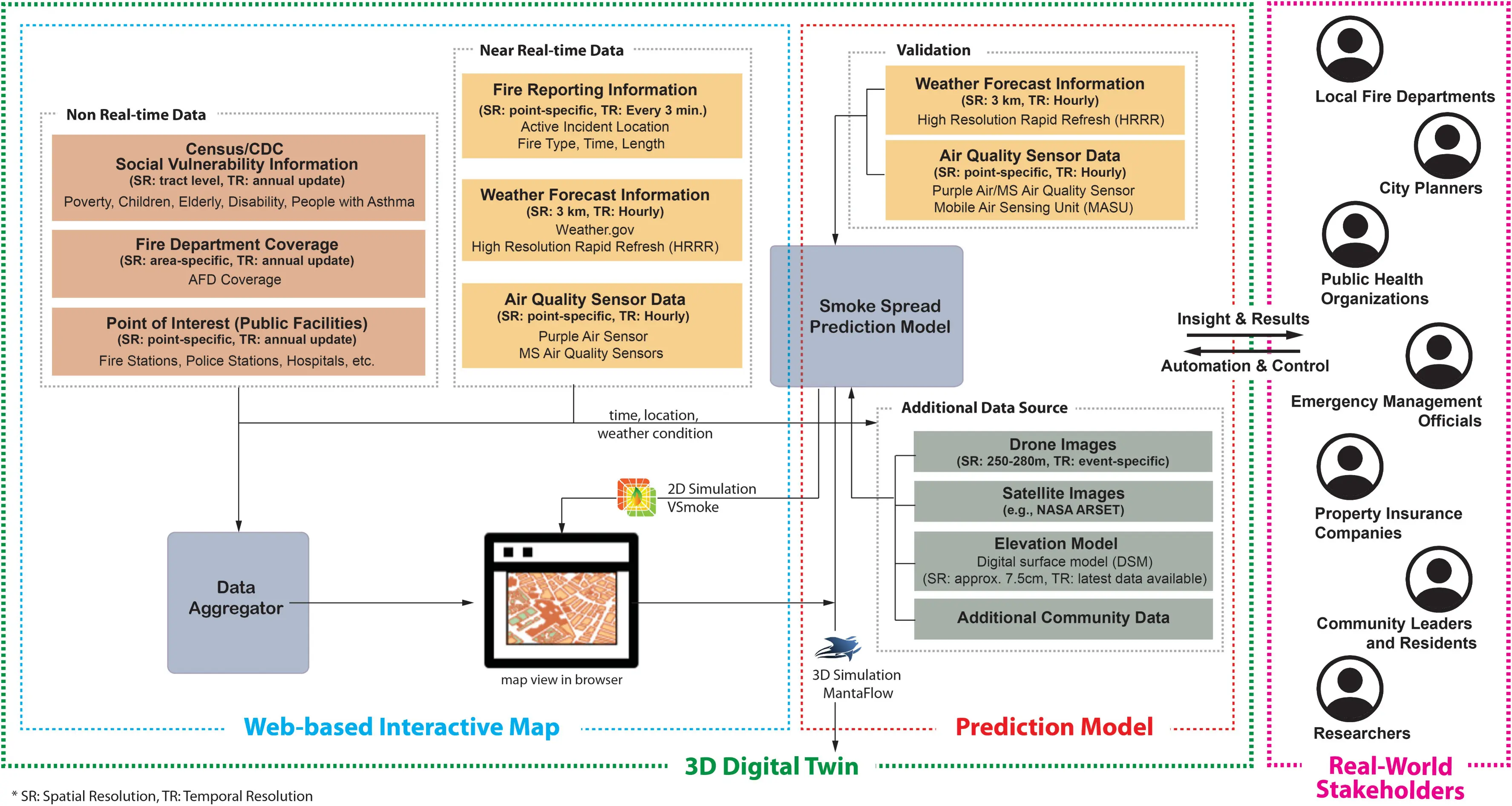
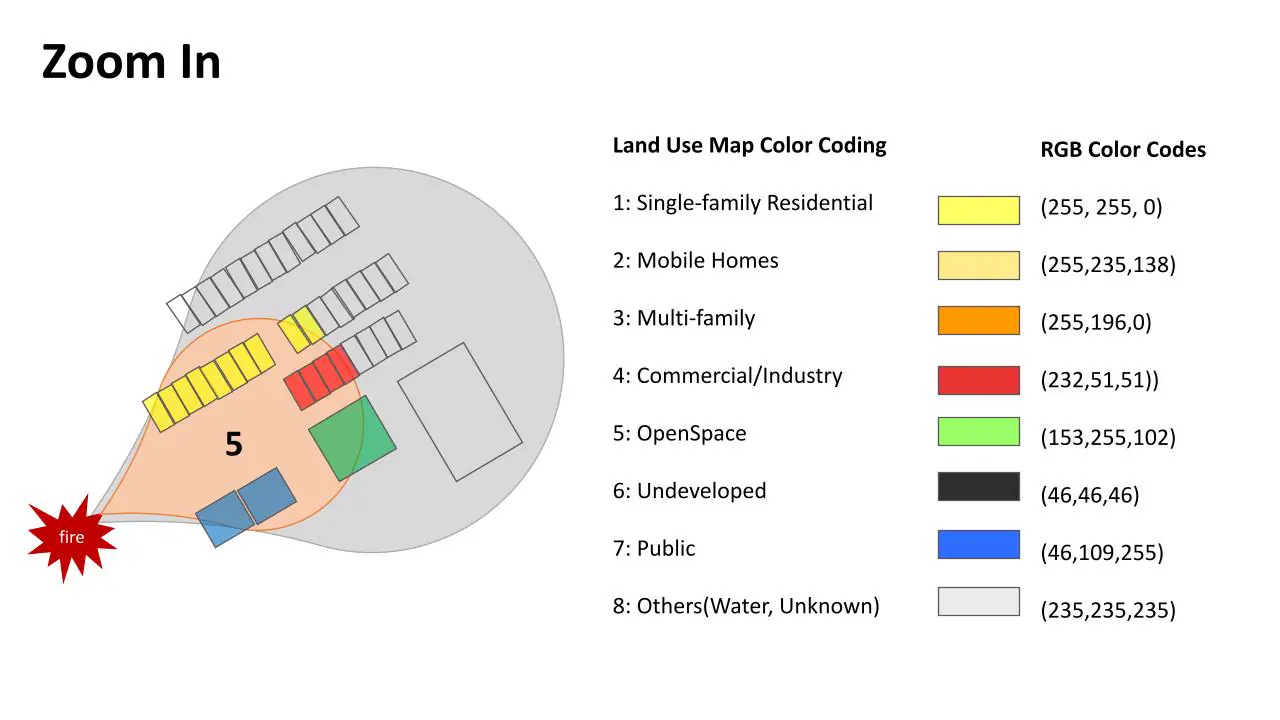
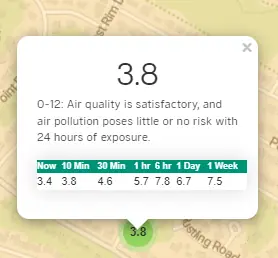
At the core of our platform is a pipeline of sensor inputs, geospatial analyses, and AI-driven simulations. Real-time feeds on air quality, wind patterns, and temperature data are utilized to forecast how a fire might spread and how its smoke may disperse across city grids. From there, we apply advanced intersection analyses, determining which critical points—such as hospitals, schools, or nursing homes—fall under the projected smoke path. Automated notifications can then be issued to these facilities, providing early warnings and guidelines for evacuation or air quality safety measures.
The development process began by integrating data sources such as historical fire reports, city zoning maps, and local meteorological inputs. Simulations were iteratively tested with the AFD, in both 2D and 3D, to ensure that the outputs realistically match observed fire events. This feedback loop allowed us to fine-tune our models, enhancing their accuracy and reliability.
Looking ahead, we plan to incorporate AI-enabled vision systems to capture on-site imagery in real time. By feeding continuous on-the-ground visuals into our models, we aim to create a digital twin that rapidly adapts to evolving conditions, reinforcing Austin’s capabilities for rapid, data-informed fire management.
RESULTS & IMPACT
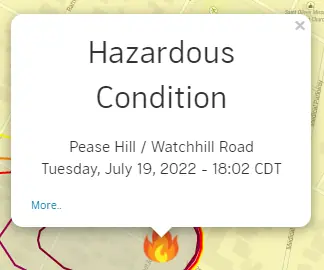
By leveraging real-time data and predictive analytics, our Fire and Smoke Digital Twin has significantly enhanced the ability of fire departments to coordinate resources, implement timely evacuations, and safeguard public health. The platform’s point-of-interest (POI) alerting system ensures that crucial facilities like hospitals, schools, and senior centers receive immediate notifications when approaching smoke paths threaten indoor air quality. This integrated approach not only supports firefighting operations but also empowers local agencies to adopt proactive strategies, such as closing public buildings or advising residents on air filtration measures.
ACKNOWLEDGEMENTS
This research is supported by the Bridging Barriers Initiative’s Good Systems Grand Challenge at The University of Texas at Austin, the City of Austin (UTA19-000382), National Science Foundation (2043060, 2133302, 1952193, 2125858, 2236305), NSF-GOLD (2228205), and CSE-OCE (1835739).